
A Full Flight Simulator (FFS) is a long-term investment whose value depends not only on its realism, but also on its availability. Every hour of downtime can disrupt training schedules, reduce operational efficiency, and increase costs, making FFS uptime optimization a priority for operators.
An effective flight simulator maintenance strategy combines regular flight simulator maintenance checks, preventive maintenance, flight simulator technician training, and long-term technical support to maximize availability, reduce downtime, and ensure reliable pilot training throughout the simulator’s lifecycle.

Why simulator availability matters
For training organizations, a Full Flight Simulator is much more than a training device—it is a critical operational asset. Maintaining high simulator availability allows operators to deliver training on schedule, maximize return on investment, and ensure pilots have continuous access to high-quality training.
An effective FFS simulator maintenance strategy is therefore essential not only to keep the simulator operational, but also to optimize training efficiency and minimize disruptions.
Downtime directly affects training operations
Unexpected simulator downtime has an immediate impact on daily operations. Training sessions may need to be postponed or cancelled, reducing simulator availability and affecting pilot qualification schedules. For operators with intensive training programs, even short interruptions can create scheduling challenges, increase operational costs, and reduce overall training capacity.
Maintaining a high level of availability is also important for supporting recurrent training and certification activities. By reducing unplanned interruptions through regular flight simulator maintenance checks, operators can improve scheduling flexibility while ensuring their simulator remains ready whenever training is required.
Maintenance is more than repairing failures
Effective maintenance is not simply about fixing equipment when something goes wrong. It is a proactive process designed to prevent failures before they affect operations.
A comprehensive maintenance strategy combines preventive inspections, software updates, hardware monitoring, navigation database updates, and technical support to keep the simulator performing at its best. Rather than reacting to unexpected issues, operators can identify potential problems early, reduce downtime, and improve long-term reliability through planned maintenance activities.
This proactive approach is one of the most effective ways to achieve FFS uptime optimization, ensuring the simulator remains available for continuous pilot training throughout its operational lifecycle.
Building an effective maintenance strategy
The most effective maintenance strategies focus on preventing issues before they interrupt training. Combining scheduled inspections, up-to-date software, qualified personnel, and clear maintenance procedures helps operators maximize simulator availability while extending the operational life of their Full Flight Simulator.
Preventive maintenance minimizes unexpected downtime
Preventive maintenance is one of the most effective ways to optimize simulator performance and reduce unplanned downtime. Rather than waiting for components to fail, operators should establish regular flight simulator maintenance checks covering both hardware and software.
A comprehensive maintenance plan typically includes periodic inspections of computers, electrical systems, control loading components, cooling systems, and other critical hardware. Software updates are equally important, including regular navigation database updates to ensure the simulator continues to meet operational and certification requirements.
Comprehensive technical documentation also plays an essential role in efficient maintenance. Maintenance manuals, qualification documentation, and troubleshooting procedures help technicians identify potential issues quickly and follow standardized maintenance processes. Together with an appropriate spare parts inventory, these resources allow many interventions to be completed faster, minimizing disruptions to training operations.
Train your own maintenance technicians
One of the most effective ways to reduce simulator downtime is to develop in-house maintenance capabilities.
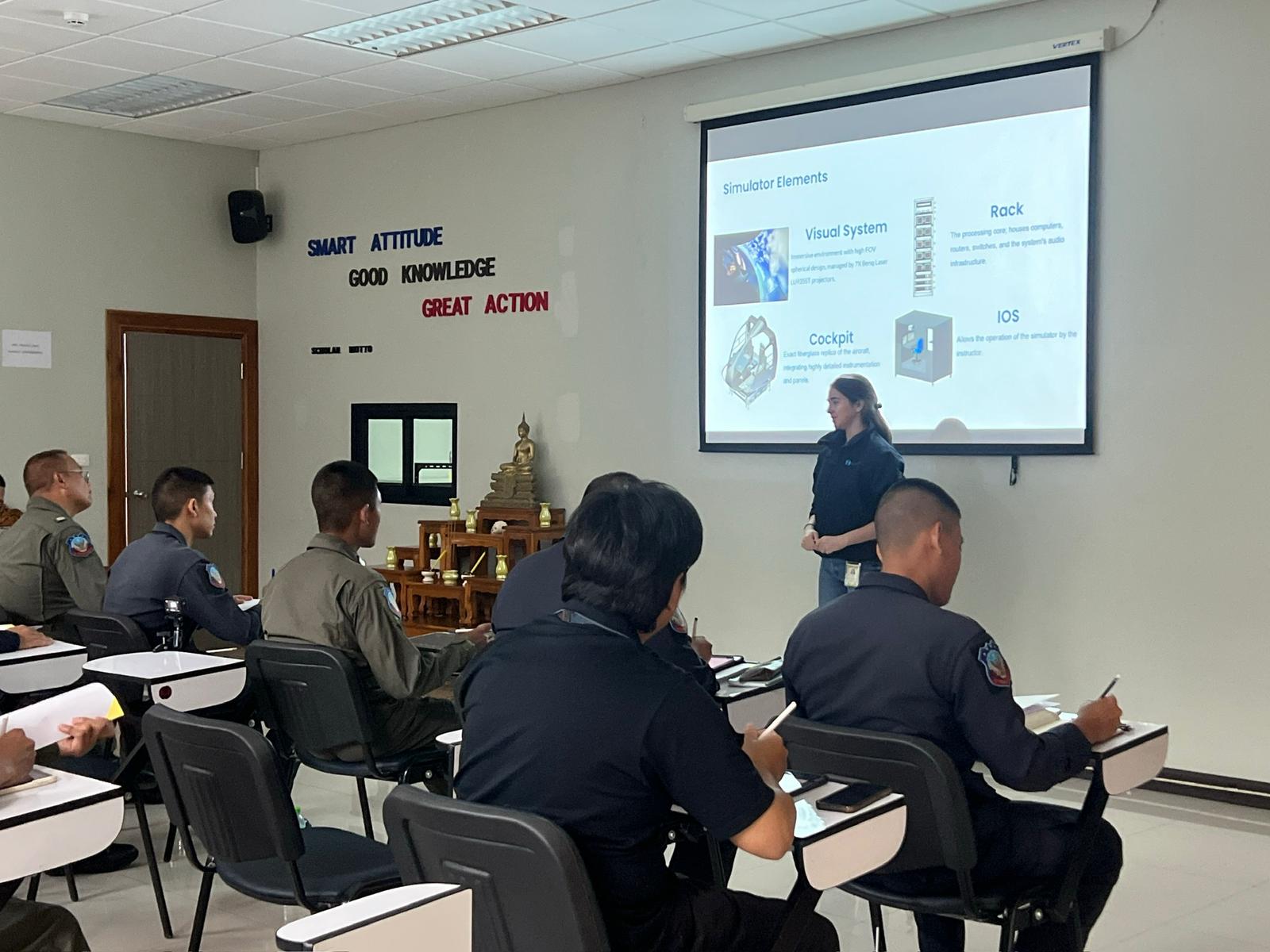
Having trained maintenance technicians allows operators to perform routine inspections, recurrent maintenance tasks, and minor hardware repairs without waiting for external assistance. Local technicians can also monitor simulator performance, evaluate failures, and coordinate with the manufacturer whenever software updates or more complex technical support are required.
Instructor training is equally important. Well-trained instructors can correctly operate the instructor station, maintain accurate training records, identify abnormal simulator behaviour, and report failures more efficiently. This close collaboration between instructors, maintenance personnel, and the simulator manufacturer helps detect potential issues early and contributes to a more reliable and efficient training operation.
By investing in both flight simulator technician training and instructor familiarization, operators create a proactive maintenance culture that supports long-term FFS uptime optimization.
Long-term support keeps simulators performing at their best
Even with a robust preventive maintenance strategy, Full Flight Simulators require ongoing technical support throughout their operational life. Software evolves, operational requirements change, and new certification or training needs may arise over time.
Long-term support helps operators maintain simulator performance, maximize availability, and ensure the device continues delivering reliable training year after year.
Combining local maintenance with remote support
The most effective maintenance approach combines local technical capabilities with manufacturer support.
At entrol, remote access allows our technical team to perform software corrections, troubleshoot issues, monitor reported bugs, and assist with navigation database updates without the need for an on-site visit in many cases. Remote technical support can also help operators during certification or recurrent qualification processes, minimizing disruptions and reducing response times.
Every operator requires a different maintenance plan
Maintenance requirements are not the same for every operator.
A Full Flight Simulator used continuously in a high-volume training centre will naturally require a different maintenance schedule than one dedicated to recurrent training or occasional mission preparation. Factors such as simulator utilization, operational profile, environmental conditions, and training intensity all influence maintenance planning.
For this reason, maintenance strategies should be tailored to each operator’s specific needs rather than following a fixed approach. Combining preventive maintenance, trained personnel, and long-term technical support allows operators to maximize FFS uptime optimization while protecting the long-term value of their simulator investment.